

For years, writing a press release was fairly straightforward. Publish the announcement, distribute it through the right channels, earn some media coverage, maybe pick up a few backlinks, and hope Google rewarded the effort.
But, people aren’t just searching Google anymore. They’re asking ChatGPT, Gemini, Perplexity, and Google AI Overviews for answers. Instead of scrolling through ten blue links, they’re getting summarized responses that often include information pulled directly from trusted sources.
That changes how press releases should be written.
Hey. Last week, Google made a massive announcement regarding changes that they are implementing over search and over the search engine. This announcement has been herald as probably some of the biggest changes that Google has made over the past twenty five years. This is going to be big. It is going to change how you, your brand, your clients' brands, your small business is going to be found when somebody goes on Google and starts asking questions. Being found in AI overviews and all of the other LLMs, ChatGPT, Perplexity, etcetera, is going to be more important than ever. That is why over the next three videos, I'm going to walk you through exactly how to structure a press release so that AI search engines, as I mentioned, Chat2PT, Gemini Perplexity, Google's AI overviews, actually pick it up, quote it, and cite your brand. Not just maybe, not if the algorithm feels generous today, actually cite it. A robust tool for enhancing your digital footprint. A business owner, marketer, and know who loves broadcast. Guys. Ready to make headlines? But before we get to the how, we have to get to the why. Because if you don't understand what just happened to search, you're going to keep paying for a service that the Internet quietly stopped using. Here's the clearest way I could explain what changed. Traditional SEO is a library index card. It tells you the book exists, the shelf it lives on, and roughly what it's about. Then you have to walk over, pull the book, flip through it, and figure out the answer yourself. Penn Blue links are typical organic search. You're doing all of the work. Now the big announcement that Google has just made or even in today's world, we may call it generative engine optimization. It's different. GEO is the librarian who already read the book, summarized the relevant chapter, and is now telling the user exactly what they need to know with a little footnote that says, hey. According to the article from Randy's company, that citation, that's the new front page of Google. That's the new number one ranking. And if your press release isn't structured to be that citation, helping your brand get visibility, you are, and I say this with love, invisible. Now here's where most marketers get this dead wrong. They assume AI reads press releases and articles the way a human reads a magazine from front to back savoring the pros, maybe pouring a glass of wine or your favorite bourbon. It does not. The AI is not your book club. AI models don't read, they don't extract, they scan for structured high signal data, and they disregard everything else because every extra word costs them compute time, and compute costs money. Here's an example of an old outdated PR headline. Ready? In a world where technology is evolving at unprecedented pace, one company is daring to imagine a boulder tomorrow. Yeah. That's the opening sentence of about 80% of the press releases on the wire right now. And the AI just sees noise. No facts, no numbers, no entity, no claim. It's the journalistic equivalent of throat clearing and the model skips right past it to find someone who actually said something useful. So when your wire service tells you they distributed to 400 outlets, well, hey, congratulations. You got 400 throat clears indexed nowhere. Meanwhile, your competitor's release got pulled into a chat GPT answer because it was built for extraction. So this brings us to the single most important acronym you're going to learn this year. It's called RAG or retrieval augmented generation. It's the engine running underneath every major AI search tool. And once you understand it, the whole press release game makes sense. Step one, retrieval. When a user asks GPT or plexity or Google's Gemini a question, the model doesn't just dig through its training data. It actively retrieves fresh information from a short list of trusted news databases. AP News, Yahoo Finance, major broadcast affiliates, podcast platforms, the big credible syndicated stuff. That's where your press release needs to live. Step two, augmentation. The AI grabs a chunk, not the whole article. A chunk, a clean self contained fact dense paragraph. That chunk gets dropped into the model's working memory right next to the user's question. Step three is generation. The AI writes its answer, weaves your facts in, and drops a citation link. Boom. Your brand in front of the user attached to authority with zero ad spend. That's the play. So here's the mental shift, and I want you to actually write this down because it changes everything you do. You are no longer pitching journalists. You are no longer writing for human first. You are feeding the LLM's context window. Google's Gemini is going to play a massive role in this. The press release is your delivery vehicle, but the payload has to be built for a machine that values structure, specificity, and citation worthy claims over clever adjectives. You're not just pitching journalists, you're feeding the context window. Get that and you're already ahead of 95% of the people on The Wire today. And frankly, over 95% of the people putting content out on the Internet. Alright. In the next video, I'm gonna show you the exact physical structure of an AI indexed press release. We're talking headline construction, the 75 word payload paragraph that tricks the AI into scraping your brand first, and the scan framework I use on every single release we send out the door. But if you don't wanna wait, and honestly, why would you? I've got two things for you in the description. First, hey, grab our free book. It's called how to get Google's AI to feature your brand. It's the playbook version of everything in this series and it's free. The link is in the first one down in the description. Second, if you wanna skip the DIY route and just have us look at your actual situation, hey, I do a free fifteen minute press strategy call. No pitch, no pressure. We'll look at where AI is currently citing your brand or more likely your competitors and figure out the move. Link to my calendar and the ebook is right below in the description. Hey, that's it for now for part one. If this clicked with you, smash that like button so the algorithm puts this in front of the next marketer who's about to waste $900 on a wire blast. And like, follow, subscribe, and I'll see you in the headlines.
The News Guy calls this Generative Engine Optimization (GEO). As AI becomes a bigger part of how people discover businesses, publishing more content is no longer enough. The brands gaining visibility are creating content that’s easier for AI to understand, retrieve, and cite. Many traditional press releases still bury the lead, rely on promotional language, and place the most important facts too far down the page, making them harder for AI systems to confidently extract and reference.
Search is no longer just about rankings. It’s also about creating structured, factual, and machine-readable content that AI can understand and surface in its answers. This guide explains what GEO is, how it complements traditional SEO, and what businesses can do to make their press releases more valuable for search engines and AI-powered discovery.
SEO Didn’t Disappear. The Rules Expanded.
Every time a new technology comes along, someone declares SEO dead. We’ve seen it before with social media, voice search, mobile-first indexing, and now AI. Yet Google Search still drives an enormous amount of traffic, and earning strong rankings continues to matter.
The difference is that search is no longer the only place customers look for information. More people are asking AI assistants to recommend products, explain services, compare businesses, or summarize research before they ever click on a website. That means visibility now happens in two places: traditional search results and AI-generated answers.
Think of SEO and GEO as working together rather than competing. SEO helps people find your website. GEO helps AI determine whether your content deserves to become part of the answer.
How AI Reads Content
Traditional search is like walking into a library. You search the catalog, find the right shelf, pull out the book, and read it yourself. Google points you toward the information, but you’re still responsible for finding the answer.
Generative AI works more like a librarian who’s already read every book in the building. You ask a question, and instead of pointing to a shelf, the librarian hands you a concise answer, citing the sources used to create it. That’s essentially how AI search works today.
The goal is no longer just getting your book onto the shelf. It’s becoming one of the sources the librarian trusts enough to include in the answer.
Why AI Reads Press Releases Differently
Ready to get Started?
People naturally follow stories. AI follows structure.
Large language models aren’t impressed by clever introductions or polished marketing copy. They look for identifiable companies, products, dates, statistics, quotes, and relationships between those pieces of information. Their job is to understand what’s being announced and determine whether the information is reliable enough to reuse.
That’s why many older press releases struggle. They often spend several paragraphs warming up the reader before revealing the actual news. While a human might patiently read through that introduction, AI systems are looking for the clearest path to the facts.
The easier you make those facts to identify, the easier you make your content to retrieve and cite.
The Biggest Mistake Brands Still Make
Many businesses believe distribution is the hardest part of a press release strategy.
It isn’t.
The harder part is creating an announcement that’s actually worth distributing. Sending a weak press release to hundreds of websites doesn’t magically make it stronger. If every outlet publishes the same vague announcement, AI still has very little useful information to work with.
Distribution can expand your reach, but it can’t fix a weak announcement. A clear, well-structured press release gives journalists, search engines, and AI systems the information they need to understand the story and confidently use it.
Why Retrieval Matters More Than Ever
One concept behind modern AI search is Retrieval-Augmented Generation, commonly called RAG. The name sounds technical, but the idea is surprisingly straightforward.
When someone asks ChatGPT or another AI assistant a question, the model may retrieve relevant information from trusted sources before generating its response. Instead of reading every word of an article, it identifies the section that best answers the user’s question and builds its response around that information.
That’s why individual sections inside a press release matter so much. A paragraph that clearly identifies the company, explains the announcement, and supports it with specific facts has a much better chance of being retrieved than a long block of promotional copy. In many ways, a modern press release has become more than a news announcement. It’s a retrieval asset.
Your Audience Just Got Bigger
For decades, businesses wrote press releases primarily for journalists. Today, there’s another audience sitting beside them.
Large language models now evaluate the same announcements to determine whether they’re useful enough to include in AI-generated answers. That doesn’t mean writing like a machine. It means writing with enough clarity that a machine can understand what a human already sees.
The companies involved should be obvious. The announcement should be easy to summarize. The supporting facts should be specific, and the quotes should add genuine insight instead of repeating the headline. Ironically, those are many of the same qualities journalists have always appreciated. AI simply rewards them, too.
GEO Is About Citation, Not Just Ranking
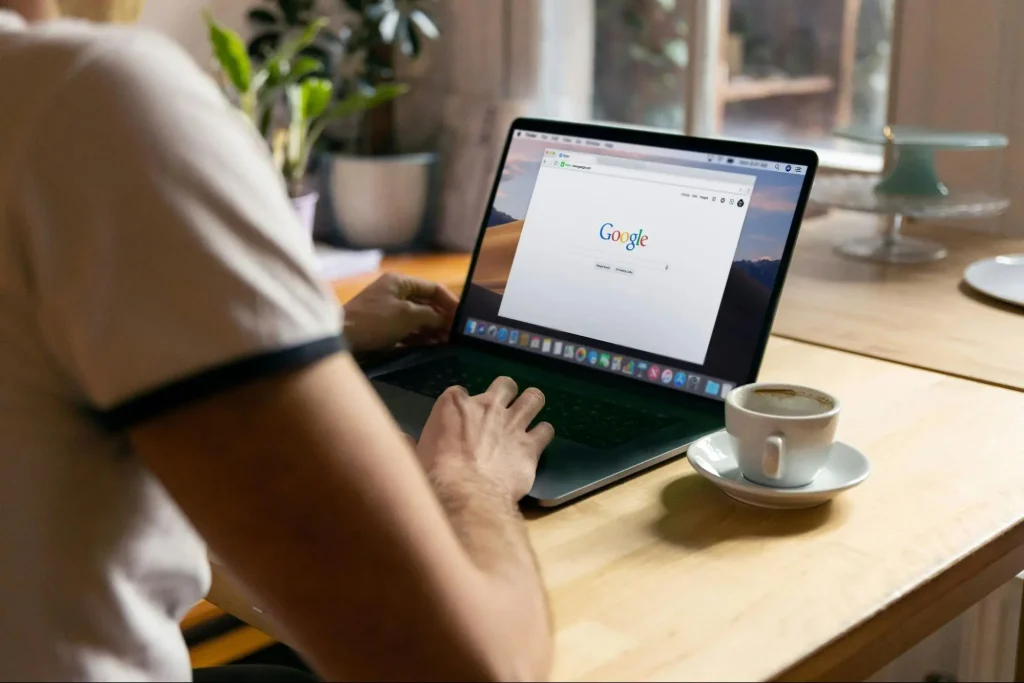
Ranking has long been the benchmark for SEO success. If your content appeared near the top of the search results, it had a better chance of attracting visitors and driving business. That’s still true today, but it no longer tells the whole story.
Instead of simply directing users to a list of websites, AI assistants increasingly retrieve information from multiple trusted sources and synthesize it into a direct response. That means the value of a press release is no longer measured only by whether someone clicks on it. It also depends on whether the information is clear, credible, and structured well enough for AI to retrieve, understand, and reference when answering a question. In other words, visibility is no longer limited to rankings. It’s also about becoming part of the answer.
That’s where GEO fits in. Rather than replacing traditional SEO, it builds on the same foundation by helping AI systems understand, retrieve, and cite your content. Google still indexes websites, and search rankings remain an essential part of online visibility, but AI assistants are also deciding which sources deserve to be summarized, referenced, and recommended. Businesses that optimize for both are better positioned to strengthen their visibility across search engines and AI-powered platforms such as ChatGPT, Gemini, Perplexity, and Google AI Overviews.
Key Takeaway
Google search is not dead, but the game has changed. The next stage of visibility is not only about ranking — it is about becoming a trusted source that AI systems can understand, retrieve, and cite.
Brands need to move beyond writing only for human readers and start creating content that helps search engines and AI platforms identify key facts, verify relationships, and confidently reference their information.
A press release that lacks clear structure, focused messaging, credible attribution, and supporting details can easily become overlooked in an AI-driven search environment. The challenge is no longer just getting published. It is creating information that can be accurately interpreted and connected back to the brand behind it.
The future of press release visibility depends on how effectively businesses organize their information. By combining stronger structure, clear positioning, authoritative voices, and specific proof points, brands can transform announcements into lasting digital assets that support discovery across search and AI platforms.
As AI assistants continue influencing how people find answers, well-structured press releases can help strengthen brand recognition, reinforce entity signals, and improve citation potential across platforms like ChatGPT, Google AI Overviews, Gemini, and Perplexity.
If you’re ready to apply these ideas to your own announcements, download the free guide, How To Get Your Brand Featured in AI Overviews, where The News Guy shares practical strategies for improving how brands are discovered and referenced.
And if you want help applying these ideas to your own business, schedule a free 15-minute consultation to review your goals, spot opportunities, and build a press release strategy that supports traditional search and AI visibility.
Frequently Asked Questions
What is GEO?
GEO stands for Generative Engine Optimization. It is the practice of structuring content so AI systems can understand, retrieve, and cite it.
How is GEO different from SEO?
SEO focuses on ranking in search results. GEO focuses on being included in AI-generated answers and citations.
Why do press releases matter for AI search?
Press releases can contain structured facts, entities, and quotes that AI systems can retrieve and cite when answering user questions.
What is RAG?
RAG stands for Retrieval-Augmented Generation. It is the process AI uses to retrieve relevant information before generating an answer.
Can old press releases still work for GEO?
Only if they are structured clearly enough for AI to extract useful facts. Most older releases were written more for human readers than for machine citation.
Ready to get Started?
