Ask ChatGPT for the best CRM, and your brand might make the list. But add three words—“for a small team”—and that recommendation could change. A brand that appears relevant to a broad search may no longer make the cut when a buyer gets specific.
In a study discussed by The News Guy, Clovion analyzed 69,120 multi-turn conversations across ChatGPT, Claude, and Gemini, covering 2,040 brands in 36 B2B categories. The finding was striking: 62% of the brands named in initial answers disappeared after a qualifying follow-up question.
That does not mean those brands suddenly became irrelevant. It means the buyer’s follow-up introduced new requirements, and the available information about those brands did not clearly establish a fit.
This raises an important question: Why do brands lose visibility when buyers add specific requirements? The answer may lie in how clearly their public-facing content communicates who their products are for and which customer needs they address.

Key Takeaways
- AI recommendations can change substantially when a buyer adds a qualifier to a search query.
- A control in the Clovion study found that 90% of brands survived when the original question was repeated, compared with only 38% surviving the qualified follow-up.
- AI systems need evidence of customer fit, including industry, company size, use case, and other specific requirements.
- Generic marketing language can make a business difficult to match with a particular buyer.
- Numerical specificity and authoritative quotes can make customer-fit claims more concrete and verifiable.
- Press releases can distribute those facts across multiple outlets, creating opportunities for independent corroboration.
- Reviewing your latest press release for explicit customer-segment details is a practical first step.
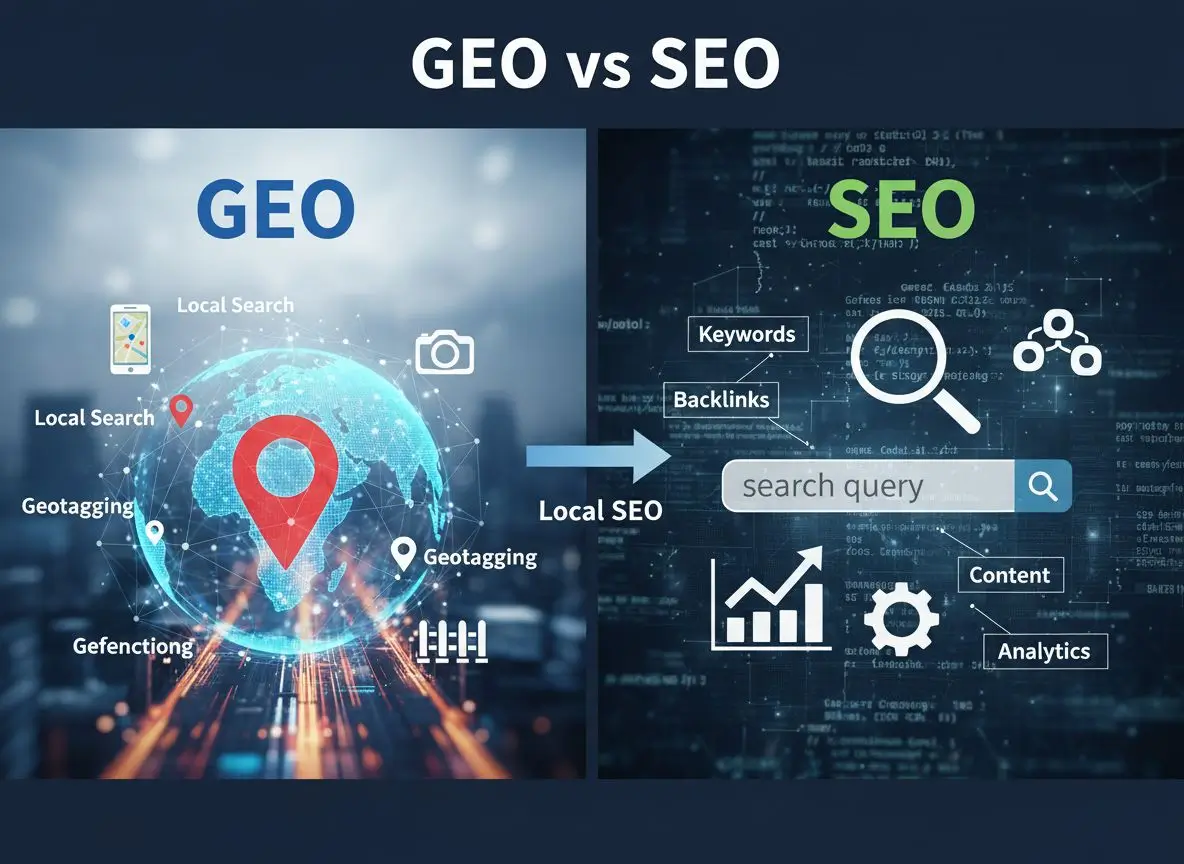
If you’re building AI visibility around your brand, it also helps to understand how GEO differs from traditional SEO and why appearing in search is only one part of becoming a source that AI systems can understand and use.
What Did the Clovion Study Find?
The study analyzed 69,120 multi-turn conversations across ChatGPT, Claude, and Gemini, covering 2,040 brands in 36 B2B software and fintech categories. Researchers asked a broad buying question, recorded which brands appeared in the answer, then added a natural follow-up such as “for a small team” or “for a large enterprise.” They compared which brands remained.
The central result: 62% of initially named brands disappeared after the qualifier was added. A control that simply repeated the original question retained 90% of brands, suggesting the larger drop was associated with the added specificity rather than ordinary answer variation alone.
The practical implication is clear: surviving a broad search does not necessarily mean a brand will survive a more specific buying question.
Why Do AI Recommendations Change When Buyers Get Specific?
AI recommendations can change when buyers add specific requirements because AI systems must assess which brands best match the buyer’s needs, not just which brands are relevant to the broader topic. A general query such as “What’s the best CRM?” may surface several well-known platforms. A qualified query such as “What’s the best CRM for a small team?” introduces an additional criterion that can change which brands are recommended.
To evaluate brand relevance in AI search, systems may consider publicly available information about a product’s target customers, company size, industry, pricing, use cases, and technical requirements. The more specific the query, the more important it becomes for a brand’s online content to clearly establish its suitability for that audience and situation.
When a brand’s website, product pages, and other public sources do not provide clear evidence of customer fit, AI systems may leave it out of a response. This does not necessarily mean the product is inferior or incapable of meeting the buyer’s needs. It may mean the available information does not establish a sufficiently clear connection between the brand and the buyer’s specific requirements, reducing its visibility in qualified AI searches.
How Different AI Models Handle Missing Information
The video’s discussion of the study highlights how different platforms can respond when a capability is not clearly documented.
Claude: Documentation and Caution
The video characterizes Claude as conservative when a capability is not clearly documented. Explicit, accessible evidence can matter when the system needs confidence in a brand’s fit. Document capabilities, customer segments, and use cases rather than expecting AI to infer them.
ChatGPT: Structured, Checkable Information
ChatGPT emphasizes reference-like information, clear specifications, and structured details. Substantive documentation outperforms homepages dominated by broad promotional language. Make customer-fit information easy to locate, interpret, and verify.
Gemini: Marketing Claims and Accuracy
Gemini may rely more readily on marketing copy, which creates a risk that promotional claims are repeated even when they are imprecise or not adequately substantiated. Keep marketing language consistent with specific, verifiable business facts.
Their behaviors differ, but the underlying business challenge is similar: AI needs information that helps it determine whether a brand fits the question. If your content never identifies the customer you serve, there may be little evidence to match against a qualifier.
Ready to get Started?
The Actual Problem: Your Brand Is Too Vague to Match

Phrases such as “serving businesses of all sizes” or “providing innovative solutions” fail to distinguish a company’s ideal customer.
Compare:
- Vague: “Our CRM helps businesses streamline customer relationships.”
- Specific: “Our CRM is designed for sales teams of five to 25 people that need to manage leads without an enterprise-level implementation.”
- Vague: “We provide logistics solutions for companies of all sizes.”
- Specific: “Our platform supports regional logistics teams managing fleets of fewer than 200 vehicles.”
Specific statements give AI more information to evaluate against the buyer’s requirements. The claims must be accurate; do not invent customer segments, capabilities, numbers, or outcomes simply to appear in more answers.
How to Make Your Brand More Matchable in AI Search
1. Name the Customer You Serve
Identify the customer segment directly rather than relying on “businesses of all sizes.” Specify the relevant industry, company size, team structure, or operational environment. Explain who benefits most from the product or service and under what circumstances.
2. Use Numerical Specificity
Include meaningful figures when they are accurate and supported. Examples may include employee ranges, number of locations, fleet sizes, customer counts, implementation timelines, or years of experience. This connects with the numerical-specificity element of the SCAN Framework.
3. Support Claims With Authoritative Quotes
Use quotes from named executives or subject-matter experts to clarify the customer problem, intended audience, or use case. Make sure the quote adds information rather than repeating a generic company slogan. This connects to the authoritative-quotes element of the SCAN Framework.
4. Keep the Information Consistent and Current
Align customer descriptions across the website, product pages, press releases, and relevant external profiles. Update outdated details when products, service areas, or target markets change. Avoid contradictions between broad marketing claims and the actual capabilities documented elsewhere.
Why Press Releases Can Help AI Understand Customer Fit
A press release can give a specific, newsworthy development a clear audience, use case, and factual context. A product launch, partnership, expansion, or milestone can clearly communicate who the offering serves.
Connect press release structure to the SCAN Framework:
- Structure: organize the announcement so its key information is easy to identify.
- Clear Focus: keep the announcement centered on a specific development and its relevance.
- Authoritative Quotes: use named sources to substantiate important claims.
- Numerical Specificity: include meaningful, verified details that define the product, audience, or achievement.
Distribution plays a role too: when independent outlets carry or reference consistent facts, they create opportunities for corroboration beyond the company’s own website. Avoid implying that syndication guarantees independent editorial endorsement or AI recommendations.
Central takeaway: A press release can do more than announce what a business has launched. When written clearly, it can also document who the offering is for and why it fits that audience.
The Press Release Audit: Find Your Customer-Fit Gap
Open your most recent press release and check:
- Does it explicitly name the intended customer or audience?
- Does it identify an industry, team size, company stage, or specific use case?
- Does it include meaningful, verifiable numerical details where relevant?
- Does a named executive or expert explain why the offering fits that audience?
- Are the same facts reflected accurately on the company website and relevant supporting pages?
If the release never identifies who the offering is for, it may be missing information qualified buyers need to ask. Revise the announcement around a genuine customer-fit statement rather than adding numbers or keywords arbitrarily.
The 3-Prompt Test: Can AI Match Your Brand to a Buyer?

Use three prompts to assess how well the brand’s public information supports increasingly specific queries.
Prompt 1: The Broad Query
“What are the best [your category] companies?”
Record which brands appear in the actual answer.
Prompt 2: The Qualified Query
“What are the best [your category] companies for [your customer segment or use case]?”
Check whether your brand remains in the recommendation and whether the answer accurately reflects your capabilities.
Prompt 3: The Specific Buying Question
“Which [your category] provider would you recommend for a [team size or industry] that needs [specific use case]?”
Look at whether your brand is named, what evidence the AI provides, and whether its description matches your actual offering.
Repeat the test across platforms and on different occasions, since AI answers can vary. Treat the results as a diagnostic snapshot, not a definitive ranking or a guarantee of future visibility.
Building a Stronger Signal for Qualified AI Searches
Maintain customer-fit information over time rather than adding it to one press release and forgetting it. Keep product pages, service descriptions, supporting content, and announcements aligned.
Publish new, genuinely newsworthy developments that reinforce the brand’s real capabilities and target audience. Use independent coverage as one part of a broader evidence base rather than relying solely on content published on the company’s own domain.
The clearer and more verifiable the customer-fit information, the easier it is for an AI system to evaluate whether the brand belongs in a qualified answer.
Make Sure Your Brand Survives Question Two
Appearing in a broad AI answer is not the same as being recommended for a specific buyer. Qualifiers introduce additional requirements, and vague brand messaging may not provide enough evidence to establish fit.
Explicit customer segments, numerical specificity, authoritative quotes, and consistent information can help make the brand easier to evaluate. A well-structured press release can document those details and distribute them beyond the company’s own website, creating opportunities for corroboration.
Review your latest press release and count how often it explicitly identifies the customer the product or service is designed to serve.
Your brand may survive the first answer. Make sure it provides the second.
Help AI Understand Who Your Brand Is For

Showing up in a broad AI answer is only the beginning. When a buyer adds a specific industry, team size, or use case, your content needs to explain why your business fits. Clear customer descriptions, verified numerical details, and focused press release messaging give AI systems more concrete information to evaluate.
Download the free guide, How To Get Your Brand Featured in AI Overviews, for practical guidance on press release strategy, the SCAN Framework, and brand visibility across Google AI Overviews and AI-powered search.
For a one-on-one review, schedule a free 15-minute consultation to review your current AI visibility, discuss your goals, and identify where stronger corroboration may help move your brand from being cited to being considered.
Frequently Asked Questions
Why does my brand disappear when I add details to an AI search query?
Your brand may disappear because AI recommendations can change when a query includes specific requirements, such as company size, industry, budget, or use case. If your website and other public sources do not clearly show how your product fits those needs, AI systems may not identify your brand as a relevant option.
What does the 62% finding mean?
In the study discussed by The News Guy, Clovion analyzed 69,120 multi-turn conversations across ChatGPT, Claude, and Gemini, covering 2,040 brands in 36 B2B categories. The study found that 62% of brands mentioned in initial answers disappeared after a qualifying follow-up question. This highlights why businesses should test their visibility in specific buyer searches, not just broad category queries.
How can I help AI understand who my product is for?
Clearly explain who your product serves, which industries it supports, what company or team sizes it suits, and which problems it solves. Keep this information accurate and consistent across your website, product pages, press releases, and other relevant public sources.
Why is numerical specificity important for AI search?
Numerical specificity helps clarify a brand’s capabilities and ideal customer profile. Verifiable figures, such as supported team sizes, measurable results, or implementation timeframes, provide more concrete information than vague claims. Use numbers only when they are accurate and evidence-based.
Can press releases improve visibility in qualified AI searches?
Press releases can communicate a brand’s target audience, capabilities, and relevant developments through clear, verifiable information. Distribution may help make these details available across multiple sources, but publishing a press release does not guarantee inclusion in AI-generated answers or recommendations.
How should I test my brand’s AI visibility?
Test your brand using a sequence of AI queries, starting with a broad category search and progressing to specific questions about your target industry, company size, or use case. Record whether your brand appears, which competitors are recommended, what sources support the answers, and whether the information about your business is accurate. Repeat the tests periodically to identify changes in visibility.