

Introduction
A press release can put a company’s news in front of a wide audience and generate valuable coverage across multiple outlets. But once the announcement has been published, there is another opportunity to build more search visibility around the story.
A cloud site stack creates a distributed network of supporting HTML sites across multiple cloud platforms, with content built specifically around the press release’s keywords, themes, and overall angle. These sites are interconnected to create additional pathways between the announcement, related content, and the pages the business wants to support.
The News Guy uses cloud site stacks as a press release amplification strategy, combining SEO-focused content, distributed cloud hosting, strategic interlinking, and indexing to build a broader search ecosystem around the original announcement.
The idea is straightforward: a press release gets the news distributed, while a cloud site stack gives that news additional supporting pages and connections that can help search engines and AI systems better understand the topic and the business behind it.
Ready to get Started?
Key Takeaways
- A cloud site stack creates multiple SEO-focused HTML sites around the themes and keywords of a press release.
- The sites are distributed across multiple cloud hosting platforms to create additional indexable pages around the campaign.
- A wheel-and-spoke interlinking structure connects the supporting pages and directs relevant links toward the press release and priority landing page.
- News-site links from the original press release distribution can be incorporated into the cloud sites through iFrames.
- Proactive indexing helps search engines discover the supporting pages and signals more quickly.
- Cloud site stacks are designed to expand the reach and search value of a press release rather than replace the original announcement.
If you’re looking at the broader role of press releases in search visibility, understanding how a Google Entity Stack can add context around an announcement provides another layer to the strategy. A cloud site stack approaches the same goal from a different direction, using distributed websites and interconnected content to amplify the original news.
What Is a Cloud Site Stack?
A cloud site stack is a collection of HTML websites hosted across multiple cloud platforms and built around a common subject, business, product, service, or announcement.
Rather than creating unrelated websites, the stack uses content specifically developed around the press release’s keywords and angle. The individual pages are then connected through an intentional linking structure so they work together as part of the same campaign.
This creates a broader search ecosystem around the original announcement.
The strategy is designed to increase the number of relevant pages associated with the campaign while creating additional links and content signals that support the original news.
Why Add a Cloud Site Stack to a Press Release?

A press release provides the foundation for the campaign. It establishes the news, identifies the company involved, and distributes the announcement across news and media outlets.
A cloud site stack builds on that foundation.
Instead of allowing the press release to remain a single piece of content surrounded by external coverage, the stack creates additional SEO-focused pages around the same announcement. Those pages can target related keywords and reinforce the themes already established in the release.
The result is a larger content ecosystem supporting the same story.
This can be particularly useful when the announcement is important enough to justify building search equity around it rather than relying solely on the initial publication and distribution cycle.
Building SEO-Focused Cloud Pages
The cloud site stack process begins by developing HTML websites with content tailored specifically to the press release.
The content is built around the announcement’s keywords, subject matter, and angle rather than using generic pages that could apply to any campaign.
For example, a product launch may generate supporting pages focused on the product category, features, applications, industry problems, and related search terms. A reputation campaign may use pages that reinforce important information about the business, its services, locations, or other relevant topics.
Each page contributes another searchable asset to the campaign while remaining connected to the same underlying subject.
This creates more opportunities for search engines to discover relevant information associated with the announcement.
The Wheel-and-Spoke Interlinking Strategy

The pages in a cloud site stack are not designed to operate independently.
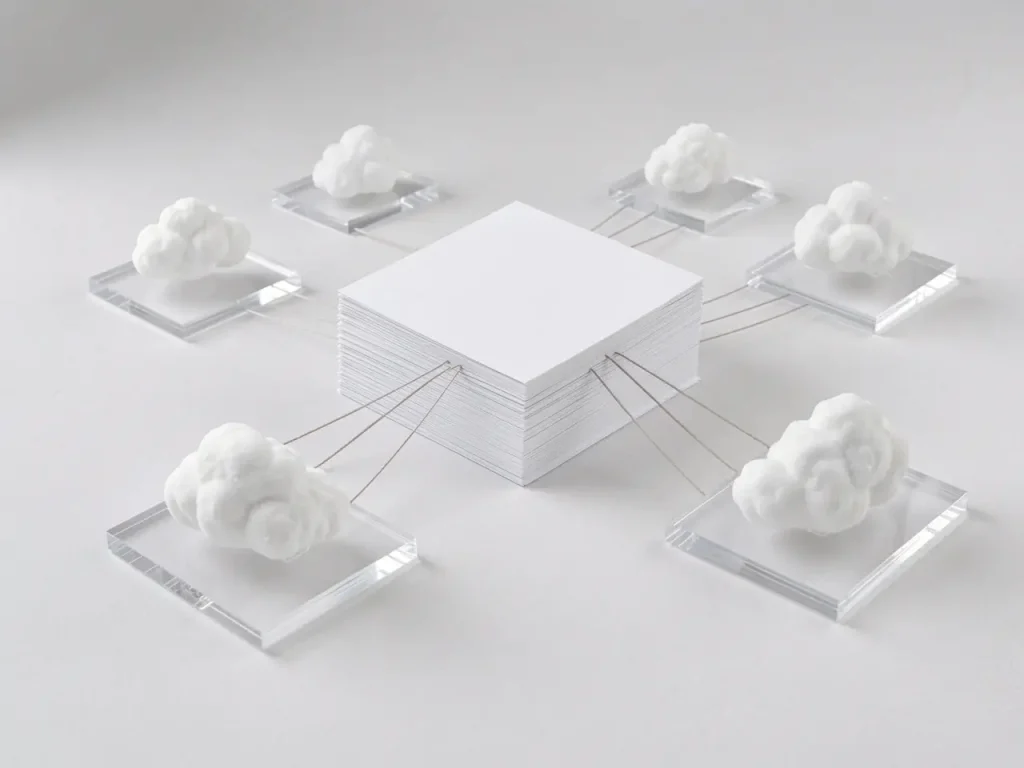
A wheel-and-spoke interlinking strategy connects the supporting pages so that they reinforce one another while directing relevant links toward the central targets of the campaign.
The individual cloud pages function as the spokes, while the central announcement or priority landing page functions as the hub.
Relevant pages can link to other supporting content and ultimately connect back to the press release and the business’s preferred destination.
This structure gives the campaign a more organized architecture than a collection of unrelated pages and allows the different cloud properties to work together.
Connecting the Cloud Stack to Press Release Coverage
The original press release contains links to the news sites where the announcement has been distributed. Those links can become part of the broader cloud site stack.
The cloud pages can incorporate the news-site links through iFrames, creating a connection between the original media coverage and the supporting cloud environment.
This bridges two parts of the campaign: the external distribution generated by the press release and the cloud-hosted content built specifically to amplify it.
The result is a network in which the original news, its media coverage, the supporting cloud pages, and the business’s priority landing page can all be connected within the broader campaign.
More Pages, More Search Opportunities
One of the primary advantages of a cloud site stack is the number of searchable pages it can create around a single announcement.
A traditional press release may generate coverage across multiple outlets, but those placements are largely controlled by the distribution network. A cloud stack adds another layer of pages that are specifically developed around the campaign’s target keywords and subject matter.
This increases the amount of content available for search engines to crawl and potentially index.
It also gives the campaign more opportunities to establish relevance around related keywords instead of relying on one press release to address every possible search query.
The objective is not simply to create more pages. The pages are designed to work together around the same campaign so that quantity is supported by topical relevance and structure.
The Role of Backlinks and Authority
Cloud site stacks are also designed to create additional backlink opportunities within the supporting network.
As the pages interlink and connect to the press release, news coverage, and priority landing page, the campaign develops a broader link structure around the original announcement.
The strategy is intended to strengthen the authority associated with the target pages while giving search engines additional pathways through which they can discover related content.
This is where the cloud site stack differs from simply publishing a collection of standalone pages. The links are structured to make the individual assets function as part of one larger campaign.
Indexing the Cloud Site Stack
Creating the pages is only one part of the process. Search engines also need to discover and crawl those pages.
For this reason, the cloud site stack service includes a proactive indexing process designed to encourage Google and other search engines to find the newly created content more quickly.
The combination of multiple cloud-hosted pages, internal links, and indexing efforts creates a broader discovery network around the campaign.
Faster discovery can be particularly useful when the announcement is tied to a product launch, reputation campaign, or another time-sensitive initiative where businesses want their supporting search assets available as quickly as possible.
Indexing does not guarantee rankings, but it allows the supporting pages to enter the search engine’s index and become eligible to compete for relevant searches.
From Press Release to Cloud-Backed SEO Wheel
A traditional press release campaign generally focuses on distribution and initial exposure.
Adding a cloud site stack creates what The News Guy describes as a cloud-backed SEO wheel, where the original announcement sits within a larger network of supporting content, links, and cloud-hosted pages.
The process follows a straightforward sequence:
Press release → cloud content → interconnected pages → indexing → broader search visibility
The press release establishes the news. The cloud stack expands the content surrounding it. Interlinking connects the supporting pages, while indexing helps search engines discover the resulting network.
This gives the original announcement a larger search ecosystem to work within rather than leaving it as a standalone publication.
How Cloud Site Stacks Support AI Visibility
Search visibility is no longer limited to traditional search results. AI-powered platforms are also retrieving information from across the web when generating answers and recommendations.
That makes the organization of information increasingly important.
A cloud site stack creates additional pages around the same announcement, keywords, entities, and topics, giving search engines and AI systems more information from which to understand the campaign.
The goal is not to guarantee that an AI system will cite a particular cloud page. Instead, the strategy creates a larger and more connected information environment around the announcement that can support discovery across both traditional search and AI-driven search experiences.
When the content, links, and entities consistently reinforce the same story, the campaign has more opportunities to establish relevance around its target subject.
Cloud Site Stacks vs. Link Farms
A cloud site stack is not intended to function as a collection of low-quality pages created solely to generate links.
The strategy described by The News Guy emphasizes SEO-optimized content, targeted keywords, and sophisticated interlinking. The pages are built around the actual press release and its campaign objectives rather than being generic sites with unrelated content.
That distinction matters because the value of a supporting network depends on how relevant and useful the content is to the campaign.
The goal is to create a connected ecosystem that reinforces the announcement, not simply to increase the number of URLs or backlinks associated with a business.
When Is a Cloud Site Stack Most Useful?
Cloud site stacks are particularly suited to campaigns where a business wants to build search visibility around an important announcement beyond the initial news cycle.
Product Launches
A product launch can generate multiple search opportunities around features, applications, use cases, industry terms, and related topics. A cloud stack can provide supporting pages that target these themes while connecting them back to the original announcement.
Reputation Management
Reputation campaigns often require consistent information to remain visible over time. A connected cloud ecosystem can provide additional pages that reinforce important information about the company and its story.
Major Company Announcements
Funding announcements, partnerships, expansions, awards, and other significant developments can benefit from additional search assets when the business wants the announcement to remain visible beyond the initial distribution period.
Long-Term Search Equity
Some announcements are designed to generate attention for a few days. Others represent developments that a company wants associated with its brand for months or years.
A cloud site stack is particularly relevant when the goal is to build a longer-lived search footprint around the announcement rather than relying on a short-term spike in attention.
How the Cloud Site Stack Process Works
The process begins with the press release and builds outward from there.
Step 1: Launch the Press Release
The announcement is written and distributed through the appropriate news and media channels. This creates the initial news coverage and the external links associated with the campaign.
Step 2: Build the Cloud Site Stack
Multiple cloud-hosted HTML sites are created with content specifically tailored to the press release’s keywords, themes, and angle.
Step 3: Connect the Pages
The supporting pages are organized through a wheel-and-spoke interlinking strategy. Relevant pages connect with one another while linking back to the press release and preferred landing page.
Step 4: Incorporate News-Site Links
The links to the news sites generated through the press release distribution are incorporated into the supporting cloud sites, including through iFrame implementations where appropriate.
Step 5: Index the Supporting Assets
A proactive indexing process is used to encourage search engines to discover the newly created pages and their connections.
Together, these steps transform the press release from a standalone publication into the center of a broader SEO-focused network.
Building a Longer-Lived Search Asset
The value of a press release does not necessarily end when the initial news cycle slows down.
The announcement can continue to be discovered through search, while the supporting cloud pages can provide additional content and links around the same subject.
This creates a longer-lived digital footprint that can continue supporting the original campaign after its initial publication.
For a product launch, that may mean maintaining search visibility around the product beyond launch week. For a reputation campaign, it can mean continuing to reinforce important information about the company. For a major announcement, it can provide additional context that remains relevant as the business moves forward.
The cloud stack gives the campaign more assets to work with rather than relying entirely on the original release.
Cloud Site Stacks as a Press Release Add-On
A cloud site stack is not a replacement for press release distribution. It is an add-on designed to amplify the work already being done by the release.
The press release gets the news into the media ecosystem. The cloud stack creates additional search-focused assets around that news.
That makes the two strategies complementary.
The release provides the announcement and initial distribution, while the cloud stack expands the supporting content, links, and search opportunities surrounding it.
For businesses investing in significant announcements, this combination can provide a more comprehensive approach to building visibility than relying on distribution alone.
Amplifying the Value of Your Press Release

A cloud site stack can extend the impact of a press release by creating a distributed network of SEO-focused pages around the announcement. Through cloud-hosted HTML sites, targeted content, wheel-and-spoke interlinking, news-site links, and proactive indexing, the strategy creates additional search assets that support the original news.
The objective is not simply to produce more pages or links. It is to build a connected ecosystem in which the press release, media coverage, supporting content, and business website reinforce the same campaign and its most important search themes.
A Google Entity Stack can approach the same goal through a different set of properties, creating additional context around the brand and announcement through connected Google assets. Guest posts can add another layer of targeted authority and backlinks, particularly when the goal is topical depth and referral traffic.
Together, these strategies demonstrate that press release visibility can extend beyond distribution. The announcement can become the foundation for a broader search ecosystem that supports the brand across traditional search and AI-powered discovery.
If you’re building a larger search strategy around an important announcement, download the free guide, How To Get Your Brand Featured in AI Overviews, for additional strategies to improve how your brand is discovered and referenced across AI-powered search. You can also schedule a free 15-minute consultation to discuss whether a cloud site stack, press release, or combination of search strategies makes sense for your campaign.
Frequently Asked Questions
What is a cloud site stack?
A cloud site stack is a network of interconnected HTML websites hosted across multiple cloud platforms and built around a specific announcement, business, product, service, or campaign. The pages use SEO-focused content and strategic interlinking to create a broader search ecosystem around the target topic.
How does a cloud site stack amplify a press release?
The cloud stack creates additional pages around the press release’s keywords and themes, then connects those pages to the announcement, news-site coverage, and priority landing page. This creates more searchable content and links supporting the original campaign.
What is a wheel-and-spoke interlinking strategy?
A wheel-and-spoke structure organizes supporting pages around central campaign targets. The individual pages can link to related content while directing relevant links toward the press release and priority landing page, allowing the pages to function as a connected network.
How are press release news links used in a cloud site stack?
News-site links generated through press release distribution can be incorporated into the supporting cloud sites, including through iFrames. This creates a connection between the external media coverage and the cloud-hosted content built around the campaign.
Does a cloud site stack guarantee higher rankings?
No. A cloud site stack is designed to support search visibility by creating additional relevant content, links, and indexing opportunities, but rankings depend on many factors and cannot be guaranteed.
Can cloud site stacks help with AI search visibility?
They can support a broader information environment around a brand, announcement, and target topic by creating additional interconnected content. However, no cloud site stack can guarantee AI citations, AI Overview placements, or inclusion in generated answers.
Is a cloud site stack the same as a Google Entity Stack?
No. A Google Entity Stack uses connected Google-owned properties to reinforce relationships around a brand or announcement. A cloud site stack uses multiple cloud-hosted HTML sites with SEO-focused content and interlinking. The two approaches can complement each other.
When should a business consider a cloud site stack?
Cloud site stacks are particularly suited to product launches, reputation management, funding announcements, major company developments, and other campaigns where a business wants to build longer-term search visibility around important news.
Is a cloud site stack a replacement for a press release?
No. The press release remains the foundation of the campaign and provides the original news and distribution. The cloud site stack is an amplification layer designed to build additional search-focused content and connections around that announcement.
Ready to get Started?
